Discovering bed bugs in a hotel room can turn your trip into a nightmare. With hotel infestations increasing by 23% across the United States in 2026, knowing how to check for bed bugs before unpacking is essential. This comprehensive guide provides proven inspection techniques, tells you exactly where to look, and explains what to do if you find these unwelcome pests during your stay.
Understanding Bed Bugs in Hotels: The 2026 Reality
Bed bugs have become an increasingly common problem in hotels across the United States, with major cities like New York, Los Angeles, and Miami reporting the highest infestation rates. These parasitic insects are expert hitchhikers that travel between locations in luggage, clothing, and personal belongings. A single bed bug infestation can spread rapidly throughout a hotel, affecting multiple rooms before detection.
According to the National Pest Management Association’s 2026 survey, hotel bed bug complaints have surged following post-pandemic travel increases. Budget hotels, mid-range chains, and even luxury properties are vulnerable. The insects are drawn to carbon dioxide and body heat, making sleeping guests perfect targets. Understanding that bed bugs can infest any hotel regardless of cleanliness standards is your first step toward protection.
Essential Tools for Hotel Bed Bug Inspection
Before conducting your hotel room inspection, having the right tools significantly improves detection success. A small flashlight or your smartphone’s flashlight function is absolutely essential, as bed bugs hide in dark crevices and are easier to spot with direct illumination. Many travelers now carry dedicated UV flashlights that can reveal bed bug excrement more effectively than standard lighting.
Disposable gloves protect your hands during inspection, while plastic bags keep your luggage elevated and protected until you complete your check. A magnifying glass helps identify tiny nymphs and eggs that measure less than 1mm. Some travelers use credit cards or hotel key cards to scrape along mattress seams where bed bugs commonly hide. These simple tools transform a casual glance into a thorough professional-level inspection.
Step-by-Step Hotel Room Inspection Process
Upon entering your hotel room, immediately place your luggage in the bathroom or on a hard surface away from the bed and upholstered furniture. Never place bags on the bed or carpet until completing your inspection. This critical first step prevents bed bugs from entering your belongings before you’ve verified the room is clean.
Inspecting the Mattress and Box Spring
Start your inspection by removing all bedding from the mattress, including sheets, blankets, and pillows. Use your flashlight to examine the mattress seams, piping, and tags where bed bugs congregate. Look for live bugs, shed skins, tiny white eggs, and dark brown or reddish fecal stains. Pay special attention to corners and the headboard attachment area where the mattress meets the box spring.
Lift the mattress to inspect the box spring underneath, focusing on the gauze fabric covering the bottom. Bed bugs often hide in the wooden frame corners and staple areas. Run your flashlight slowly along every seam and crevice. If you notice a sweet, musty odor resembling rotting raspberries, this indicates a significant bed bug infestation. Check the mattress tag area thoroughly, as this is one of the most common hiding spots.
Checking the Headboard and Bed Frame
The headboard is a primary bed bug harborage area, yet many travelers skip this crucial inspection point. Pull the headboard away from the wall or, if mounted, use your flashlight to illuminate the back panel and wall contact points. Examine screw holes, decorative grooves, and any fabric or upholstered sections where bed bugs can hide.
Inspect the bed frame joints and slats underneath the mattress. Wooden frames with cracks or joints provide ideal hiding spots. Check behind nightstands and inside drawers adjacent to the bed. Use your flashlight to examine the wall behind the headboard for dark spots or live insects. If the headboard cannot be moved, inspect it as thoroughly as possible from all accessible angles.
Examining Furniture and Room Fixtures
Beyond the bed, upholstered furniture throughout the room requires careful inspection. Check sofas, chairs, and ottomans by examining seams, cushion zippers, and the underneath areas. Bed bugs often establish satellite colonies in furniture near the bed, especially in rooms with previous infestations.
Inspecting Upholstered Chairs and Sofas
Flip cushions and examine all seams and crevices in upholstered furniture. Check the fabric underneath chairs where it meets the frame. Look between and under cushions for dark fecal spots, shed skins, or live bugs. Pay attention to any tears or worn areas in the fabric, as bed bugs exploit these entry points to hide inside furniture.
Use your flashlight to inspect along wooden furniture legs and joints where upholstery attaches to frames. Check behind furniture that sits against walls. Luggage racks deserve special attention since travelers place bags directly on them, making them common transfer points for bed bugs. Examine the fabric straps and wooden frame joints carefully.
Checking Curtains, Outlets, and Wall Fixtures
Examine curtain hems and pleats where they pool on the floor or hang near the bed. Bed bugs hide in fabric folds during daylight hours. Check where curtain rods attach to walls. Inspect electrical outlets and switch plates by shining your flashlight at an angle to spot insects or fecal stains around the edges.
Look behind picture frames, clocks, and wall-mounted fixtures. Check the ceiling-wall junction and baseboards throughout the room. Examine the closet area, including shelves, hanging rods, and the inside corners. Bed bugs can survive in any crack or crevice, so thoroughness is essential for effective hotel room inspection.
Identifying Bed Bug Signs: What to Look For
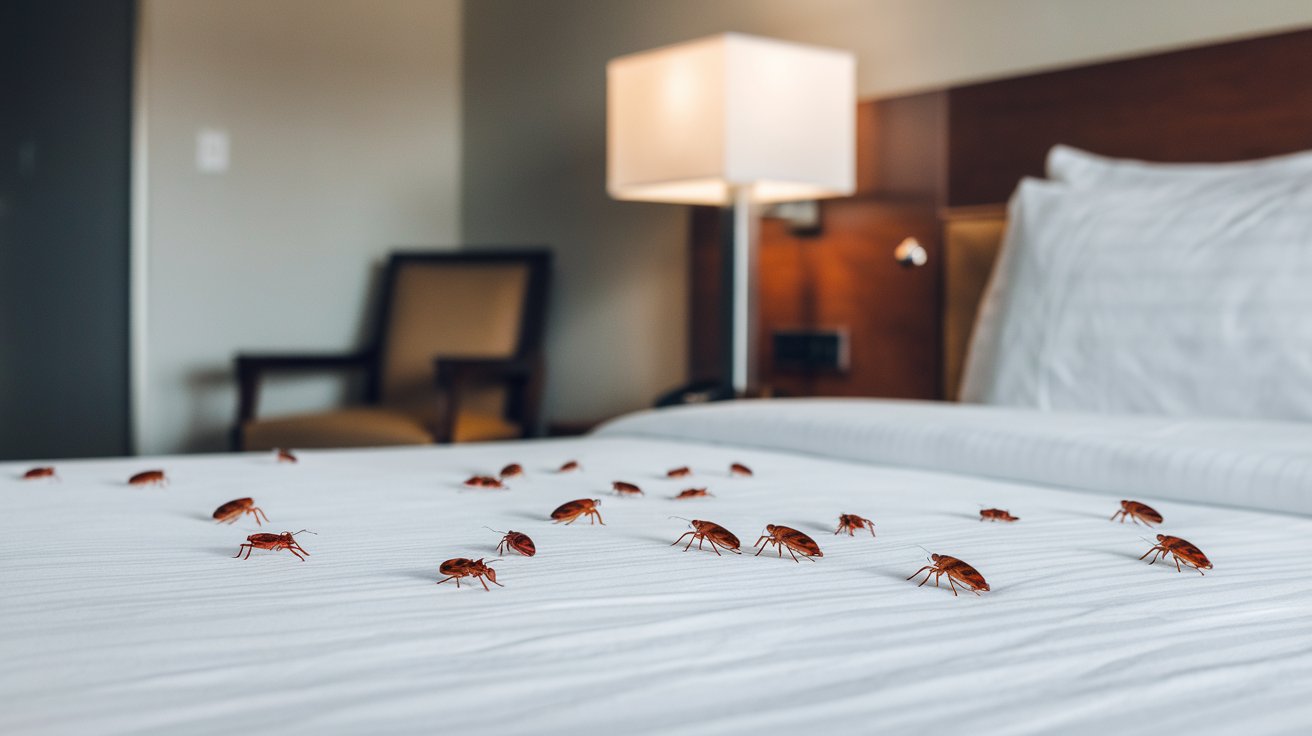
Recognizing bed bug evidence requires knowing what these pests and their traces look like. Adult bed bugs are reddish-brown, oval-shaped, and about the size of an apple seed at 5-7mm long. Nymphs are smaller, translucent, and become reddish after feeding. Bed bug eggs appear as tiny white or pearl-colored specks approximately 1mm long, often clustered in protected areas.
The first signs of bed bugs often include dark brown or black fecal spots on sheets, mattresses, or walls. These stains result from digested blood and appear as small dots or smears. Look for shed exoskeletons, which are translucent casings left behind as nymphs grow through five molting stages. A sweet, musty odor indicates a significant infestation. Blood spots on bedding occur when bugs are crushed during sleep or after feeding.
What to Do If You Find Bed Bugs in Your Hotel
If you discover bed bugs during your inspection, do not unpack or place any belongings on soft surfaces. Immediately notify the front desk and request documentation of your complaint. Take clear photos or videos showing the bugs or evidence. Politely but firmly request a room change to a different floor, not just an adjacent room, since bed bugs can travel between connecting spaces.
According to hotel bed bug policies in 2026, reputable establishments must offer alternative accommodations or full refunds when infestations are verified. Pack your belongings carefully in sealed plastic bags before moving to prevent transporting bugs. If you’ve already unpacked, place all items in bags and wash everything in hot water above 120°F immediately upon returning home. Inspect your luggage thoroughly using a flashlight before bringing it inside your house.
Understanding Your Chances of Getting Bed Bugs from Hotels
The likelihood of encountering bed bugs in hotels depends on multiple factors including location, hotel maintenance standards, and travel frequency. Current 2026 statistics indicate that approximately 1 in 5 Americans has experienced a bed bug infestation or knows someone who has. Hotels in high-traffic urban areas show infestation rates nearly double those in suburban locations.
Your actual chances of getting bed bugs from a hotel range from 3-7% per stay in major metropolitan areas, with rates dropping below 2% in less traveled regions. Budget accommodations report slightly higher rates than luxury properties, but no hotel type is immune. The key factor is turnover rate; hotels with frequent guest changes face higher exposure risks. However, proper inspection before settling into any room reduces your personal risk to nearly zero regardless of these statistics.
Using the Bed Bug Registry and Prevention Resources
The Bed Bug Registry is a free online database where travelers report bed bug encounters at specific hotels across the United States. Before booking accommodations, search the registry by entering the hotel name and location to view recent reports. While not comprehensive, this resource provides valuable insights into hotels with documented bed bug problems.
Cross-reference registry information with recent reviews on travel websites mentioning bed bugs. Keep in mind that a single report doesn’t necessarily indicate current infestation, as hotels may have addressed the issue. Look for patterns of multiple recent complaints suggesting ongoing problems. Many hotels now display pest control certifications or treatment schedules; ask about these during booking to demonstrate your awareness and encourage transparency about bed bug prevention measures.
Special Techniques: Checking for Bed Bugs with Flashlight and Iron
The flashlight inspection method remains the most effective detection technique for travelers. Hold your light at a low angle parallel to surfaces to create shadows that make bed bugs and their signs more visible. Focus your beam directly on seams, cracks, and corners where insects hide. A focused LED flashlight works better than diffused lighting for spotting small bed bugs and eggs.
An innovative technique involves using the hotel iron to check for bed bugs. Heat is deadly to these insects, and the iron’s concentrated heat can help identify infested areas. Carefully move the hot iron slowly along mattress seams and watch for insects fleeing the heat. This method also works preventatively; running a hot iron over luggage racks before use can eliminate any bugs present. However, use caution to avoid damaging hotel property or burning fabrics.
Protecting Your Luggage During Hotel Stays
Proper luggage protection prevents bed bugs from hitchhiking home with you. Always place suitcases on hard surfaces like bathroom floors, luggage racks after inspection, or inside the bathtub rather than on carpeted floors or beds. Use large plastic bags or specialized bed bug-proof luggage liners to create barriers around your belongings.
Consider packing clothes in sealed plastic bags within your suitcase for additional protection. Keep your luggage zipped closed when not accessing items. Before departing, inspect every item and the inside of your luggage carefully with your flashlight. Vacuum suitcase seams and crevices upon returning home. Immediately wash all clothing in hot water and dry on high heat for at least 30 minutes to kill any potential bed bugs that may have entered your belongings.
What to Do If You Slept in a Hotel with Bed Bugs
Discovering you slept in a room with bed bugs requires immediate action to prevent bringing them home. First, contain all your belongings in sealed plastic bags before leaving the hotel. Keep bagged items in your car trunk or garage rather than bringing them directly inside your home. This quarantine prevents potential bugs from establishing in your residence.
Unpack outside or in a garage if possible. Place all washable items directly into a washing machine using hot water above 120°F, then dry on the highest heat setting for at least 30 minutes. For items that cannot be washed, seal them in black plastic bags and leave in direct sunlight or a hot car for several days, as temperatures above 113°F kill bed bugs. Vacuum your luggage thoroughly, then seal the vacuum bag and dispose of it outside. Inspect your body for bites, which appear as red, itchy welts often in lines or clusters. Monitor your home for several weeks, checking your own mattress seams and bed frame regularly.
Hotel Bed Bug Policies and Your Rights
Understanding hotel bed bug policies empowers you to take appropriate action when encountering infestations. Most reputable hotels in 2026 have formal protocols requiring immediate room changes, full refunds, or alternative accommodations when bed bugs are discovered. Many chains now include bed bug clauses in their guest service guarantees, reflecting the seriousness of this issue.
You have the right to document infestations through photos and videos for your records. Hotels cannot legally refuse to acknowledge verified bed bug problems. If a hotel refuses to address your complaint appropriately, document everything and report the establishment to your state health department and online review platforms. Consider filing complaints with consumer protection agencies if the hotel fails to provide remedies. Keep all receipts and correspondence. Some travelers successfully obtain compensation for related expenses like replacement clothing or professional pest control for their homes if they can demonstrate the hotel was the source.
Which Hotels Have the Most Bed Bugs: 2026 Data
Rather than naming specific chains, understanding which hotel types report higher bed bug incidents helps inform booking decisions. According to 2026 pest management industry data, properties with the highest turnover rates in urban centers show elevated infestation reports. Hotels near airports, convention centers, and tourist attractions face greater exposure due to international and domestic traveler volume.
Budget accommodations report slightly higher incidents, but luxury hotels are not immune despite more frequent inspections and pest control services. Extended-stay properties show moderate rates, while vacation rentals with infrequent professional cleaning have emerging issues. Location matters more than brand; hotels in New York, Los Angeles, Chicago, Miami, and Las Vegas consistently rank among cities with highest bed bug reports. The key takeaway is that vigilant inspection matters regardless of price point or star rating, as any hotel can experience infestations through guest introduction.
Related video about how to check for bed bugs hotel
This video complements the article information with a practical visual demonstration.
Most asked questions about how to check for bed bugs hotel
What is the fastest way to check for bed bugs in a hotel room?
The fastest method is to immediately inspect the mattress seams and headboard using a flashlight before unpacking. Pull back the sheets and examine the piping along the mattress edges, focusing on corners where the mattress meets the box spring. Check behind the headboard if accessible. This focused 3-5 minute inspection of high-probability areas detects most infestations. Look for live bugs, dark fecal stains, shed skins, or tiny white eggs. Keep your luggage in the bathroom during this initial check to prevent contamination.
How likely is it to get bed bugs from a hotel?
Your likelihood of encountering bed bugs in hotels ranges from 3-7% per stay in major US cities during 2026, with rates under 2% in less traveled areas. However, your actual risk of bringing them home is much lower with proper inspection and luggage protection. Approximately 1 in 5 Americans has dealt with bed bugs at some point. The key factor is vigilance; thorough room inspection before settling in reduces your personal risk to nearly zero. Hotels in high-traffic urban areas, particularly near airports and tourist attractions, show higher infestation rates regardless of price point or star rating.
What are the first signs of bed bugs in a hotel?
The first signs of bed bugs include dark brown or reddish-black fecal stains on mattress seams, sheets, or nearby walls. These appear as small dots or smears from digested blood. Look for shed exoskeletons, which are translucent casings left during molting. Live bugs resemble apple seeds in size and color, while eggs appear as tiny white specks about 1mm long. Blood spots on bedding occur from crushed bugs. A sweet, musty odor resembling rotting raspberries indicates significant infestation. Check mattress piping, headboard crevices, and box spring corners first, as these are primary hiding locations.
What should I do immediately if I find bed bugs in my hotel room?
Do not unpack or place belongings on soft surfaces. Immediately notify the front desk and document the infestation with photos or videos. Request a room change to a different floor, not an adjacent room, since bed bugs can travel between connecting spaces. Demand written documentation of your complaint. Place any items you’ve already unpacked into sealed plastic bags. Reputable hotels should offer alternative accommodations or a full refund according to standard bed bug policies in 2026. If the hotel refuses appropriate remedies, file complaints with your state health department and document everything for potential compensation claims.
Can I use the hotel iron to check for bed bugs?
Yes, the iron method is an innovative inspection technique. Carefully move a hot iron slowly along mattress seams and watch for bed bugs fleeing from the heat, as temperatures above 113°F are deadly to them. This works because bed bugs instinctively move away from extreme heat. You can also preventatively run the hot iron over luggage racks before use to eliminate any bugs present. However, exercise caution to avoid damaging hotel property or burning fabrics. This technique works best combined with traditional flashlight inspection of seams, headboards, and furniture. The iron provides both detection and limited preventative treatment.
What should I do with my luggage if I stayed in a hotel with bed bugs?
Immediately seal all belongings in plastic bags before leaving the hotel. Keep bagged items in your car trunk or garage rather than bringing them inside your home. Unpack outside if possible. Wash all clothing in hot water above 120°F and dry on high heat for at least 30 minutes to kill any bed bugs or eggs. For non-washable items, seal them in black plastic bags and leave in direct sunlight or a hot car for several days. Thoroughly vacuum your luggage, focusing on seams and pockets, then dispose of the vacuum bag outside. Inspect your suitcase with a flashlight before bringing it inside. Monitor your home bedroom for several weeks, checking your own mattress and bed frame regularly.
| Inspection Area | What to Check | Signs to Look For |
|---|---|---|
| Mattress & Box Spring | Seams, piping, tags, corners, underneath | Live bugs, fecal stains, shed skins, eggs |
| Headboard & Frame | Back panel, screw holes, joints, wall contact | Dark spots, live insects, musty odor |
| Furniture | Cushion seams, zippers, legs, luggage rack | Fecal spots, bugs in crevices, eggs |
| Room Fixtures | Curtains, outlets, baseboards, pictures | Stains around edges, bugs in folds |
| Prevention | Luggage placement, protective barriers | Keep bags off bed, use hard surfaces |