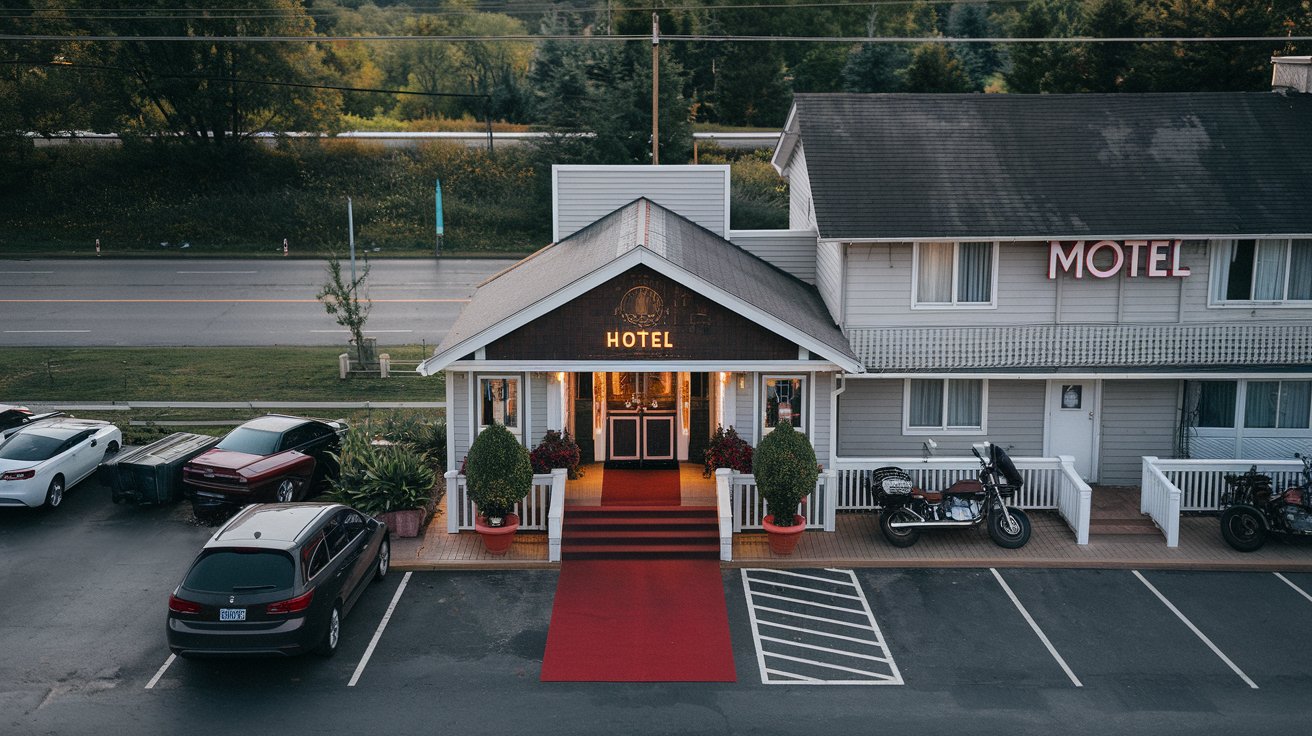
The difference between hotel and motel extends far beyond just the name on the sign. While both provide overnight accommodations for travelers across the United States, they cater to distinctly different needs and travel styles. Hotels typically offer full-service amenities in urban or resort locations, while motels provide convenient, budget-friendly roadside lodging designed for motorists. Understanding these differences helps you choose the right accommodation for your trip and budget in 2026.
What Is a Motel: Roadside Accommodation for Motor Travelers
The term motel originated as a combination of “motor” and “hotel,” perfectly describing its purpose of serving automobile travelers. First appearing in the 1920s across American highways, motels revolutionized road travel by providing convenient, affordable overnight stops. In 2026, approximately 18,000 motels operate throughout the United States, with concentrations along interstate highways and secondary routes connecting major cities.
Modern motels maintain their original concept: accessible parking directly outside guest rooms, minimal amenities, and quick check-in processes. The typical motel features one or two-story buildings with exterior corridors, allowing guests to park within steps of their room door. This design eliminates the need for elevators, elaborate lobbies, or complex navigation through interior hallways. Average room rates in 2026 range from $55 to $95 per night, making motels the most budget-conscious choice for travelers prioritizing convenience and value over luxury.
What Is a Hotel: Full-Service Accommodations for Every Traveler
A hotel represents a comprehensive lodging establishment offering interior corridors, multiple floors, extensive amenities, and diverse services designed for various traveler needs. The hotel industry in the United States encompasses over 56,000 properties in 2026, ranging from economy chains to luxury resorts, business conference centers to boutique establishments. Hotels typically occupy prime locations in city centers, tourist destinations, airports, and resort areas where guests seek more than basic overnight shelter.
The defining characteristic of hotels is their full-service approach to hospitality. Interior hallways connect rooms, providing climate-controlled access throughout the property. Most hotels feature centralized parking areas separate from guest rooms, requiring visitors to walk through lobbies and corridors. Standard hotel amenities include 24-hour front desk service, housekeeping, room service options, business centers, fitness facilities, and on-site dining. Nightly rates vary dramatically from $80 for economy hotels to $500-plus for luxury properties, reflecting the breadth of services and experiences offered.
Key Differences Between Hotels and Motels
Understanding the difference between hotel and motel requires examining multiple factors that distinguish these accommodation types. While both serve travelers needing overnight lodging, their operational models, target audiences, and service philosophies differ significantly. The distinctions have evolved over decades, with each accommodation type refining its niche in the American hospitality market. In 2026, these differences remain pronounced despite some overlap in the mid-range market segment.
Location and Accessibility Differences
The most obvious difference between hotels and motels appears in their geographical positioning and accessibility. Motels predominantly line highways, interstates, and major roadways, strategically positioned for travelers needing quick highway access. You’ll find motels clustered at interstate exits, along historic Route 66, and on approach roads to national parks. Their roadside locations serve motorists breaking long journeys into manageable segments, typically offering immediate visibility from passing vehicles.
Hotels occupy urban centers, downtown districts, airport vicinities, and resort destinations where guests plan extended stays or specific purposes beyond simple transit. Major cities like New York, Los Angeles, and Chicago concentrate thousands of hotel rooms in business districts and tourist areas. Resort hotels dominate locations like Miami Beach, Lake Tahoe, and the Hawaiian islands, while airport hotels serve business travelers and those with early flights. This fundamental location strategy reflects each accommodation type’s primary market focus.
Building Design and Room Layout
Architectural design represents another critical difference between hotel and motel accommodations. Motel buildings feature exterior corridors with direct parking access, typically arranged in L-shapes, U-shapes, or linear configurations facing parking lots. Ground-floor rooms predominate, though some motels add second floors with exterior staircases. Average motel rooms measure 250-300 square feet, focusing on essential sleeping and bathroom facilities without extra space for lounging or work areas.
Hotels utilize interior corridor designs with centralized access points, requiring guests to enter through main lobbies before reaching room floors via elevators or interior staircases. Multi-story construction is standard, with properties ranging from three-story economy hotels to 50-story urban towers. Hotel rooms average 300-400 square feet in standard configurations, often including separate sleeping areas, work desks, seating spaces, and larger bathrooms. Luxury hotels expand room sizes to 500-800 square feet for standard accommodations, with suites exceeding 1,000 square feet.
Amenities and Services Comparison
The amenities package creates the most substantial experiential difference for guests choosing between these accommodation types. Motels provide basic necessities: clean rooms, comfortable beds, private bathrooms, cable television, and increasingly, free Wi-Fi. Most motels offer limited front desk hours, sometimes closing overnight or operating via call buttons. Parking remains free and abundant. Continental breakfast, when available, typically consists of packaged pastries, coffee, and juice in a small common area. Vending machines substitute for room service.
Hotels deliver comprehensive service packages scaled to their market segment. Budget hotels include daily housekeeping, 24-hour staffed front desks, breakfast buffets, business centers, and fitness rooms. Mid-range hotels add swimming pools, on-site restaurants, concierge services, meeting rooms, and upgraded toiletries. Luxury hotels provide fine dining, spa facilities, premium linens, turndown service, valet parking, and personalized guest experiences. In 2026, smart room technology, mobile check-in, and sustainability features increasingly differentiate hotel offerings across all price points.
Price Differences Between Hotels and Motels in 2026
The price difference between hotel and motel accommodations reflects their divergent service models and target markets. Data from the American Hotel and Lodging Association shows motel average daily rates at $78 nationwide in 2026, with regional variations from $55 in rural areas to $110 near major attractions. Motels maintain consistent year-round pricing with minimal seasonal fluctuation, as their highway-dependent clientele remains relatively stable regardless of tourist seasons.
Hotel pricing demonstrates extreme variability based on location, brand tier, and seasonal demand. Economy hotel chains average $95 per night, mid-scale hotels command $145, upscale properties reach $215, and luxury hotels exceed $385 nightly. Urban hotels in markets like San Francisco, Boston, and Washington DC frequently surpass $300 for standard rooms during peak seasons. Resort hotels implement dynamic pricing, with off-season rates 40-60% lower than summer or holiday peaks. Business hotels reduce weekend rates by 25-35% when corporate travelers disappear.
Why Americans Call Some Hotels Motels
The question “why do Americans call a hotel a motel” reflects evolving terminology and blurred lines in the lodging industry. Historically, the distinction remained clear: motels served motorists with exterior-access rooms, while hotels offered interior corridors and comprehensive services. However, modern branding strategies and property renovations have complicated traditional classifications. Some properties originally built as motels underwent renovations adding interior corridors and expanded amenities, yet retained “motel” branding for name recognition and local loyalty.
Marketing considerations also influence naming decisions. In certain regions, particularly rural and suburban America, the term “motel” carries positive associations with value, convenience, and no-frills reliability. Property owners recognize their target demographic appreciates straightforward motel branding rather than hotel pretensions. Conversely, some roadside properties adopt “hotel” or “inn” designations hoping to attract guests perceiving motels as outdated or unsafe. Brand perception studies in 2026 show 62% of travelers under 35 view hotels and motels interchangeably when both meet cleanliness and safety standards, while 71% of travelers over 55 maintain distinct preference associations.
Hotel vs Motel vs Inn: Understanding All Accommodation Types
Beyond the motel vs hotel distinction, inns represent a third category with unique characteristics. Traditional inns typically offer 5-25 rooms in historic or boutique settings, emphasizing personalized service, local character, and often including breakfast in room rates. Inns frequently occupy converted historic buildings, Victorian homes, or purpose-built structures designed to evoke specific architectural periods. In 2026, approximately 8,500 properties identify as inns across the United States, concentrated in New England, the Mid-Atlantic, and California wine country.
The difference between hotel and inn centers on scale, atmosphere, and operational style. While hotels emphasize standardization and consistent brand experiences, inns pride themselves on unique character, individual room designs, and owner involvement in daily operations. Inn room rates typically range $120-$280 nightly, positioning them between mid-range and upscale hotels. Many modern inns blur category lines, with some operating more like small boutique hotels while others maintain bed-and-breakfast traditions. Guest preferences determine appropriate choices: inns suit travelers seeking intimate, personalized experiences, while hotels serve those wanting predictable amenities and services.
Motel vs Hotel vs Hostel for Budget Travelers
Budget-conscious travelers often compare motels, hotels, and hostels when planning accommodations. Hostels offer the lowest rates, averaging $35-$55 per bed in shared dormitory rooms, though private rooms reach $75-$95. The United States hostel market remains smaller than Europe’s, with approximately 350 hostels nationwide in 2026, concentrated in major cities, college towns, and outdoor recreation areas. Hostels target young international travelers, backpackers, and solo adventurers comfortable with communal spaces and shared bathrooms.
The choice between motel and hostel depends on priorities beyond price. Motels provide privacy, vehicle access, and freedom from shared spaces, appealing to families, couples, and travelers with cars. Hostels deliver social environments, central urban locations accessible by public transit, and communal kitchens reducing meal costs. Budget hotel chains like Motel 6, Super 8, and Red Roof Inn bridge the gap, offering private rooms with basic amenities at $65-$90 nightly. For solo travelers without vehicles exploring cities, hostels maximize value; for road-tripping families or couples, motels provide better privacy and convenience at reasonable costs.
When to Choose a Motel Over a Hotel
Specific travel scenarios make motels the superior choice despite hotels’ broader amenity packages. Road trips across America particularly benefit from motel convenience, allowing travelers to park directly outside rooms, quickly unload vehicles, and depart early without navigating parking structures or waiting for elevators. Long-distance moves, when traveling with pets, or transporting valuable cargo favor motel accessibility and ground-floor convenience. Motels also excel for late-night arrivals when travelers simply need clean beds without utilizing hotel amenities.
Budget considerations frequently drive motel selection. Travelers allocating funds toward activities, dining, or attractions rather than accommodations find motels deliver essential comfort at minimal cost. Families with children appreciate ground-floor access eliminating elevator concerns and direct vehicle access for forgotten items or crying babies. Business travelers making brief overnight stops between appointments value motel efficiency over hotel services they won’t use. Solo travelers seeking simple, secure overnight stops without social interaction prefer motel privacy to hotel public spaces.
When Hotels Provide Better Value Than Motels
Conversely, numerous situations make hotel accommodations worth the premium pricing. Multi-night stays in single destinations benefit from hotel amenities like fitness centers, pools, restaurants, and business facilities that enhance comfort over extended periods. Urban exploration trips require central hotel locations with walkable access to attractions, restaurants, and entertainment, while highway motels isolate guests from city centers. Business travel involving client meetings, presentations, or professional networking demands hotel meeting spaces, business centers, and upscale environments projecting professionalism.
Special occasions including anniversaries, celebrations, or romantic getaways warrant hotel experiences delivering memorable atmospheres beyond basic lodging. Resort hotels provide comprehensive vacation packages with recreation, dining, and entertainment eliminating transportation needs. Weather considerations also matter: interior hotel corridors protect guests from rain, snow, or extreme temperatures when moving between rooms and vehicles, while motel exterior access exposes guests to elements. Families with elderly members or individuals with mobility challenges appreciate hotel elevators, luggage assistance, and accessible design features often absent from motels.
Hotel and Motel Safety Considerations in 2026
Safety perceptions significantly influence accommodation choices, with hotels generally rated safer than motels in consumer surveys. Interior corridor designs limit public access to guest floors, requiring key cards for elevator or stairwell entry beyond lobbies. Hotel staffing provides 24-hour security presence, monitored entry points, and surveillance systems throughout properties. The American Hotel and Lodging Association reports 89% of hotels implemented enhanced security measures between 2020-2026, including upgraded door locks, improved lighting, and staff safety training.
Motel exterior corridors and parking lot visibility create different security dynamics. While direct room access provides convenience, it also allows easier observation of guest movements and belonging transport. However, modern motel chains invest heavily in safety improvements, installing upgraded lighting, security cameras, and electronic locks. Reputable motel brands maintain security standards comparable to budget hotels. Safety largely depends on specific property management rather than accommodation type. Travelers should research individual properties through recent reviews, verify adequate lighting, confirm electronic locks, and assess overall maintenance regardless of hotel or motel designation.
The Future of Hotels and Motels in America
The American lodging industry evolves continuously, with hotels and motels adapting to changing traveler expectations in 2026. Technology integration reshapes both accommodation types: mobile check-in, digital room keys, smart thermostats, and voice-activated controls appear across price points. Sustainability initiatives drive operational changes, with 73% of hotels and 45% of motels implementing energy-efficient systems, water conservation measures, and waste reduction programs according to industry reports.
Market analysts project the distinction between budget hotels and motels will continue narrowing as both categories compete for price-conscious travelers. Many older motels undergo renovations adding interior corridors, upgraded amenities, and modern aesthetics, effectively transforming into limited-service hotels. Simultaneously, budget hotel chains streamline operations, reducing amenities and staff to compete with motel pricing. Extended-stay properties blur category lines further, combining apartment-style accommodations with hotel or motel structures. Despite convergence in mid-market segments, luxury hotels and basic roadside motels will maintain distinct identities serving fundamentally different traveler needs and expectations through 2030 and beyond.
Related video about difference between hotel and motel
This video complements the article information with a practical visual demonstration.
Frequently Asked Questions
What is the main difference between a hotel and a motel?
The main difference centers on building design and access. Motels feature exterior corridors with parking directly outside rooms, designed for motorists needing quick highway access. Hotels use interior corridors accessed through central lobbies, offering comprehensive amenities and services. Motels average $78 nightly with basic accommodations, while hotels range from $95 to over $385 depending on service level, location, and amenities provided.
Why is it called a motel instead of a hotel?
The term motel combines “motor” and “hotel,” originating in the 1920s when automobile travel expanded across America. Early motor hotels served drivers needing convenient roadside stops with direct vehicle access to rooms. The name distinguished these properties from traditional downtown hotels requiring guests to park separately and walk through lobbies. Today, approximately 18,000 motels operate throughout the United States, maintaining this original concept of motorist-focused convenience.
Are motels cheaper than hotels in America?
Yes, motels consistently cost less than hotels in 2026. Motels average $78 per night nationwide, ranging from $55 in rural areas to $110 near attractions. Budget hotels start around $95 nightly, mid-scale hotels reach $145, upscale properties command $215, and luxury hotels exceed $385. Motels maintain lower prices by offering fewer amenities, limited services, and simpler building designs that reduce operational costs compared to full-service hotels.
Which is safer, a hotel or a motel?
Hotels generally receive higher safety ratings due to interior corridor designs limiting public access and 24-hour staffed front desks. However, reputable motel chains implement comparable security measures including upgraded lighting, surveillance cameras, and electronic locks. Safety depends more on specific property management than accommodation type. Research individual properties through recent reviews, verify adequate lighting and security features, and assess overall maintenance regardless of whether choosing a hotel or motel.
What is the difference between a motel, hotel, and inn?
Motels serve motorists with exterior-access rooms, basic amenities, and highway locations averaging $78 nightly. Hotels offer interior corridors, comprehensive services, and urban or resort locations from $95 to over $385 per night. Inns provide 5-25 rooms in boutique or historic settings with personalized service, unique character, and breakfast included, typically costing $120-$280 nightly. Each accommodation type serves distinct traveler preferences for convenience, amenities, or intimate experiences.
When should I choose a motel over a hotel?
Choose motels for road trips requiring quick highway access, late-night arrivals needing only basic sleep accommodations, travel with pets or valuable cargo benefiting from direct vehicle access, or budget-focused trips prioritizing activity spending over lodging amenities. Motels excel for short overnight stops, family travel with young children needing ground-floor convenience, and situations where hotel services like restaurants, fitness centers, or business facilities won’t be utilized.
| Feature | Motel | Hotel |
|---|---|---|
| Average Cost (2026) | $78 per night | $95-$385+ per night |
| Location Type | Highways, interstates, roadside | Urban centers, resorts, airports |
| Building Design | Exterior corridors, direct parking access | Interior corridors, centralized lobbies |
| Amenities | Basic: bed, bathroom, TV, Wi-Fi | Comprehensive: restaurants, pools, fitness, business centers |
| Best For | Road trips, budget travel, quick stops | Extended stays, business travel, special occasions |
| Parking | Free, directly outside room | Separate lots or garages, may charge fees |