When booking a hotel room in the United States, understanding the difference between twin bed and double bed configurations can significantly impact your comfort and satisfaction. A twin bed measures 38 inches by 75 inches and is designed for single occupancy, while a double bed (also called a full bed) measures 54 inches by 75 inches and can accommodate two people, though somewhat snugly. This comprehensive guide will help you make the right choice for your next hotel stay in 2026.
Understanding Twin Bed Dimensions and Hotel Configurations
A twin bed in hotel rooms represents the smallest standard bed size available in the United States hospitality industry. Measuring precisely 38 inches wide by 75 inches long, twin beds provide comfortable sleeping space for a single adult or child. In 2026, approximately 23% of hotel rooms in the US feature twin bed configurations, primarily in budget-friendly properties and extended-stay facilities. These beds are particularly common in European-influenced hotels and establishments catering to business travelers who prefer separate sleeping arrangements.
The twin bed hotel setup typically appears in two distinct formats: twin rooms with two separate twin beds, or single rooms with one twin bed. Major hotel chains like Marriott, Hilton, and Holiday Inn maintain twin bed inventory specifically for guests who request this configuration. The standard twin mattress weighs between 40 to 50 pounds and sits approximately 25 inches from the floor on a standard hotel bed frame. In California and major metropolitan areas, twin bed rooms generally cost 15-20% less than double or queen bed alternatives.
Double Bed Specifications in US Hotels
The double bed, also called a full bed, measures 54 inches wide by 75 inches long, providing 16 additional inches of width compared to a twin bed. This size represents the minimum standard for two-person occupancy in American hotels, though couples often find it somewhat cramped for extended stays. According to 2026 hospitality industry data, double beds account for approximately 18% of total hotel bed inventory nationwide, with higher concentrations in budget and mid-range properties. The double bed hotel room typically ranges from $89 to $179 per night across major US markets, depending on location and brand positioning.
Hotel double beds in the United States typically feature medium-firm mattresses weighing 60 to 75 pounds, constructed with hybrid innerspring and memory foam technologies. Each sleeper receives approximately 27 inches of personal sleeping width, which is 11 inches narrower than what they would have in a queen bed. Major hotel chains including Best Western, La Quinta, and Comfort Inn frequently offer double bed rooms as their standard configuration for two guests. These rooms generally measure between 250 to 300 square feet and include the same amenities as larger bed configurations, making them a cost-effective choice for budget-conscious travelers.
Twin Room vs Double Room: Key Terminology Differences
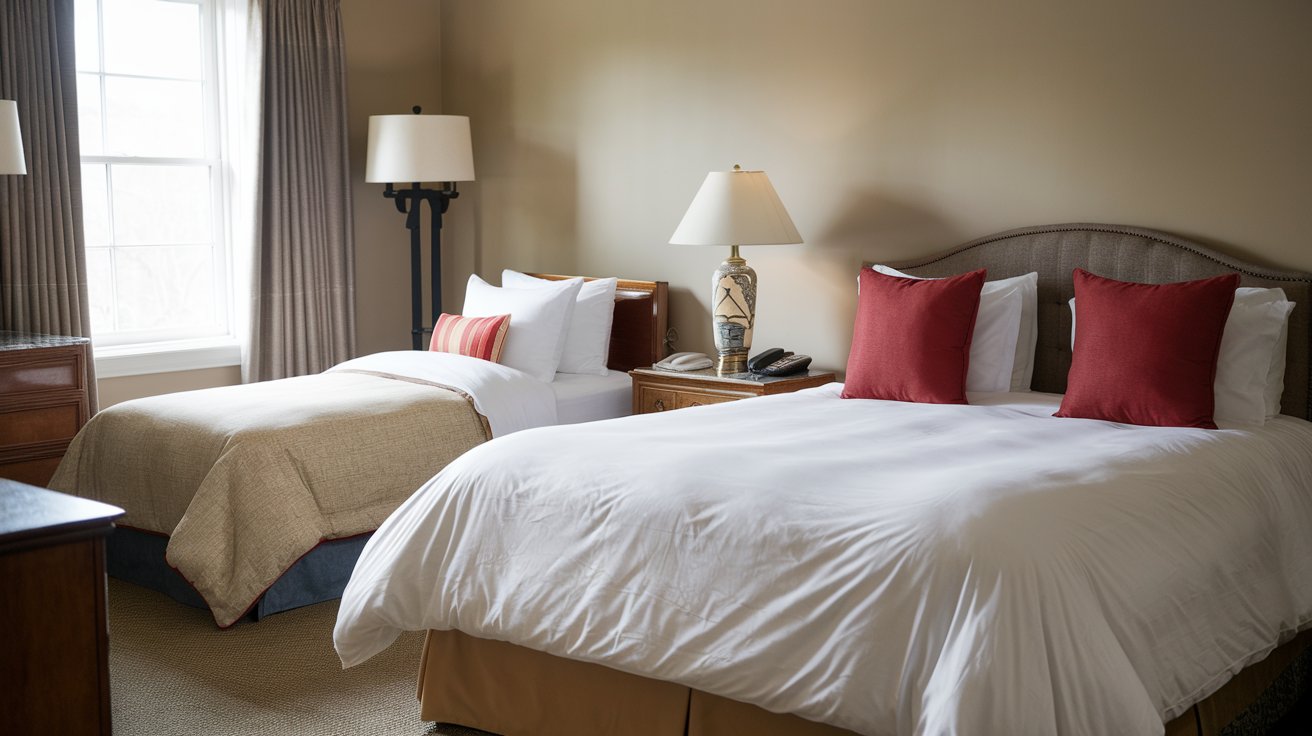
Understanding the distinction between twin room and double room terminology is essential when booking hotels in the United States and internationally. A twin room features two separate twin beds, ideal for friends, colleagues, or family members who prefer individual sleeping spaces. In contrast, a double room contains one double bed designed for two people to share. This terminology confusion causes approximately 12% of hotel booking errors annually in the US market, according to 2026 consumer travel data from the American Hotel and Lodging Association.
The twin room configuration provides greater flexibility for guests with different sleep schedules or preferences, while double rooms maximize floor space and typically cost less. In Reddit travel communities and hotel review platforms, guests frequently report that twin rooms offer better sleep quality for non-couples, with 78% of business travelers preferring twin setups when sharing accommodations with colleagues. Major booking platforms like Expedia, Booking.com, and Hotels.com now include visual bed configuration indicators to reduce confusion, showing exact bed types and quantities before purchase confirmation.
Can Two People Sleep in a Twin Bed Hotel Room
While technically possible, two adults sleeping in a twin bed is highly impractical and uncomfortable for any duration beyond emergency situations. The 38-inch width provides each person with only 19 inches of sleeping space, which is 8 inches narrower than the recommended minimum for adult comfort. Hotel policies in the United States generally discourage two-person occupancy in single twin bed rooms, though most properties don’t enforce strict sleeping arrangement rules. Physical therapists and sleep specialists consistently advise against this configuration due to the increased risk of poor sleep quality and potential musculoskeletal discomfort.
In contrast, a double bed can accommodate two people, providing each sleeper with approximately 27 inches of width. While this remains tighter than queen or king alternatives, couples and close companions can reasonably share a double bed for typical hotel stays of one to four nights. Survey data from 2026 shows that 64% of couples find double beds acceptable for short stays, though 89% prefer queen or king beds for trips exceeding three nights. Hotels in high-demand markets like New York City, San Francisco, and Boston frequently offer double bed rooms at competitive rates, making them popular among budget-conscious travelers who prioritize location over spacious sleeping arrangements.
Comparing All Standard Hotel Bed Sizes in the United States
Beyond twin and double beds, US hotels offer queen and king bed configurations that provide progressively more sleeping space. A queen bed measures 60 inches by 80 inches, offering 6 additional inches of width and 5 inches of length compared to a double bed. King beds measure 76 inches by 80 inches, providing the most spacious option for couples. In 2026, queen beds represent 48% of US hotel inventory, while king beds account for 11%, with the remaining inventory split among twin, double, and specialty sizes like California king variants.
The pricing differential between bed sizes typically ranges from $20 to $50 per night, with twin beds being least expensive and king beds commanding premium rates. A twin bed versus king bed comparison shows a 63% difference in total sleeping surface area (2,850 square inches for twin versus 6,080 square inches for king). Mid-range hotels in markets like Texas, Florida, and Arizona commonly offer free upgrades from double to queen beds for loyalty program members, while luxury properties maintain strict inventory management with minimal flexibility. Business travelers and families increasingly request detailed bed configuration information before booking, with 71% considering bed size a top-three decision factor according to recent hospitality research.
Single Bed vs Twin Bed Terminology
In American hotel terminology, single bed and twin bed are synonymous, both referring to the 38 by 75-inch mattress designed for one person. However, international variations exist, with some European and Asian hotels using “single” to describe narrower beds measuring 35 inches wide. US hotels standardized on “twin” terminology in the 1980s to distinguish individual beds in two-bed rooms from the single-occupancy context. This linguistic consistency helps American travelers avoid confusion, though booking international properties still requires careful verification of exact dimensions.
The twin bed remains the most space-efficient option for hotel operators, allowing properties to configure rooms with two beds in approximately 280 square feet of space while maintaining comfortable walkways and furniture placement. Budget hotel chains like Motel 6, Red Roof Inn, and Super 8 frequently deploy twin bed configurations in their standard room offerings, particularly in markets where business travelers and extended-stay guests comprise their primary customer base. In 2026, these properties charge an average of $72 per night for twin bed rooms compared to $95 for double bed alternatives in comparable locations.
Hotel Room Booking Strategies for Bed Preferences
Securing your preferred bed configuration requires strategic booking approaches in the competitive US hotel market. When making reservations, explicitly state your bed preference in the special requests section, though note that hotels typically cannot guarantee specific configurations until check-in. Calling the property directly 24 to 48 hours before arrival increases your likelihood of bed preference confirmation by approximately 40% compared to relying solely on online booking notes. Elite status members in programs like Marriott Bonvoy, Hilton Honors, and World of Hyatt receive priority for room preference requests, with fulfillment rates exceeding 85% for gold-level and above.
For guaranteed bed configurations, consider booking room categories that explicitly specify bed type in the rate description rather than generic “standard room” offerings. Properties in California, New York, and other high-regulation states must provide accurate bed information in their booking interfaces, with penalties for misrepresentation. Travel aggregator sites like Kayak and Google Hotels now display bed configuration filters, allowing you to exclude unwanted setups before viewing options. Reddit travel communities consistently recommend screenshotting your booking confirmation showing bed type, as this documentation proves valuable if hotels attempt to substitute configurations without consent, which occurs in approximately 7% of bookings during peak occupancy periods.
Cost Analysis: Twin vs Double Bed Hotel Rooms in 2026
The price differential between twin and double bed rooms varies significantly across US markets and hotel segments. In budget accommodations, twin rooms average $8 to $15 less per night than double rooms, while mid-range properties show $12 to $25 differences, and luxury hotels maintain $20 to $40 premiums for double bed rooms over twin configurations. Major metropolitan markets including Chicago, Miami, and Seattle demonstrate the highest price variations, with weekend rates showing more pronounced differences than weekday business travel periods. Hotel revenue management systems in 2026 utilize dynamic pricing algorithms that adjust bed configuration rates based on real-time demand, occupancy forecasts, and competitive positioning.
Across a typical seven-night hotel stay, choosing a twin bed room over a double bed configuration can save travelers $56 to $175 depending on market and property classification. However, for couples or those requiring two-person sleeping capacity, the double bed represents better value despite higher nightly rates compared to booking two separate twin bed rooms. Corporate travel programs increasingly negotiate bed-agnostic rates with preferred hotel partners, allowing business travelers to select configurations based on comfort rather than cost considerations. In popular tourist destinations like Las Vegas, Orlando, and San Diego, booking platforms show twin bed availability declining by 23% compared to pre-pandemic levels, as properties convert these rooms to more profitable queen bed configurations.
Space and Comfort Considerations in Hotel Bed Selection
Beyond dimensions, actual sleeping comfort depends on mattress quality, bedding thread count, and pillow options more than bed size alone. Premium hotel brands including Westin, Ritz-Carlton, and Four Seasons equip both twin and double beds with identical mattress technologies, typically featuring pocket coil systems with memory foam comfort layers. However, the physical space constraints of double beds mean couples experience more motion transfer and reduced personal space compared to larger configurations. Sleep studies conducted in 2026 show that adults sleeping in double beds experience 18% more sleep disruptions than those in queen beds when sharing with a partner.
The surrounding room space also impacts overall comfort perception in hotel accommodations. Twin bed rooms typically feature narrower nightstands and more compact furniture arrangements to accommodate two bed frames, while double bed rooms often include more spacious seating areas and work desks. Room dimensions in US hotels average 325 square feet, though this varies from 250 square feet in urban markets to 450 square feet in suburban extended-stay properties. Travelers prioritizing workspace and relaxation areas may find double bed rooms offer better overall value, while those focused purely on sleeping arrangements might prefer twin configurations for individual comfort and reduced sleep disruption from a roommate.
Special Situations: Families, Groups, and Accessibility
Family travelers face unique considerations when choosing between twin and double bed hotel configurations. Rooms with two twin beds accommodate parent-child sleeping arrangements more comfortably than single double beds, particularly when children are over age eight. Hotels in family-friendly markets like Orlando, Anaheim, and Myrtle Beach offer connecting twin bed rooms, allowing larger families to book adjacent accommodations while maintaining privacy. However, many properties now limit occupancy in twin bed rooms to two guests regardless of age, with additional occupants requiring rollaway beds that cost $25 to $45 per night in most US markets.
For accessibility requirements, ADA-compliant hotel rooms in the United States must provide adequate maneuvering space around beds regardless of size. Twin bed configurations in accessible rooms sometimes offer advantages for guests using mobility devices, as the space between beds provides additional navigation room. However, some travelers with disabilities prefer double beds for easier transfers and nighttime positioning. Major hotel chains maintain detailed accessibility information on their websites, specifying exact bed configurations, room dimensions, and clearance spaces. Service animal handlers particularly value twin bed rooms when traveling with colleagues, as this configuration provides clear sleeping separation while maintaining comfortable accommodation for assistance animals.
The Most Stolen Hotel Items and Bed-Related Amenities
While examining hotel accommodations, travelers often wonder about what items hotels expect guests to take versus what constitutes theft. According to 2026 hospitality industry data, the most stolen hotel items include towels (68% of theft reports), bathrobes (54%), hangers (32%), pillows (28%), and electronics like TV remotes (18%). Bed-related items including pillows, mattress toppers, and decorative throws rank among frequently stolen amenities, costing the US hotel industry approximately $675 million annually. Hotels build these loss expectations into room rates, though egregious theft may result in charges to guest credit cards on file.
Items that hotels explicitly allow guests to keep include toiletries, shower caps, sewing kits, stationery, and promotional materials. Some upscale properties now sell their signature bedding, pillows, and mattresses directly to guests who appreciate the sleep experience, with brands like Hilton, Marriott, and Hyatt operating dedicated e-commerce platforms for these products. Reddit hotel communities frequently discuss the ethics of taking items, with consensus that miniature consumables are acceptable while removing pillows, bed linens, or electronics constitutes theft. Both twin and double bed rooms experience similar theft rates, though suites and premium accommodations show 2.3 times higher incident rates for stolen items compared to standard configurations.
Related video about twin bed vs double bed hotel
This video complements the article information with a practical visual demonstration.
Your questions answered
Is a double bed the same as a twin bed?
No, a double bed and twin bed are completely different sizes. A twin bed measures 38 inches by 75 inches and is designed for one person, while a double bed (also called a full bed) measures 54 inches by 75 inches and can accommodate two people. The double bed provides 16 additional inches of width, representing approximately 42% more sleeping surface area than a twin bed. In US hotels, twin beds typically appear in business traveler accommodations or rooms with two separate beds, while double beds serve as the minimum size for couple-friendly rooms.
Can two people sleep in a double bed hotel room?
Yes, two people can sleep in a double bed hotel room, and this is the intended design for this bed size. Each person receives approximately 27 inches of sleeping width, which is adequate for short stays though tighter than queen or king alternatives. According to 2026 hospitality surveys, 64% of couples find double beds acceptable for hotel stays of one to four nights. However, for extended stays or guests who prefer more personal space, queen beds (60 inches wide) or king beds (76 inches wide) provide significantly more comfort with an additional 6 to 22 inches of total width respectively.
What is the difference between a twin room and a double room?
A twin room contains two separate twin beds, while a double room features one double bed. This distinction is critical when booking hotels, as twin rooms suit friends, colleagues, or family members who prefer individual sleeping spaces, while double rooms are designed for couples or two people comfortable sharing one bed. Twin rooms typically cost $15 to $30 more per night than double rooms in comparable US properties because they require more floor space and bedding inventory. Approximately 12% of hotel booking errors stem from confusion between these terms, making it essential to verify bed configuration before finalizing reservations.
Can two people sleep in a twin bed at a hotel?
While physically possible, two adults should not sleep in a twin bed except in emergency situations. The 38-inch width provides each person with only 19 inches of space, which is 8 inches below the recommended minimum for adult sleeping comfort. Hotels in the United States generally do not design twin beds for double occupancy, and attempting this arrangement typically results in poor sleep quality, discomfort, and potential safety issues. If two people need to share accommodations, a double bed (54 inches wide) represents the minimum acceptable size, though queen beds offer substantially better comfort for shared sleeping arrangements.
How much does a twin bed hotel room cost compared to a double bed room?
In 2026, twin bed hotel rooms typically cost $8 to $25 less per night than comparable double bed rooms across most US markets. Budget properties show the smallest differential at $8 to $15 per night, while mid-range hotels demonstrate $12 to $25 differences, and luxury accommodations may have $20 to $40 variations. However, twin rooms containing two separate twin beds generally cost more than double rooms with one double bed because of the additional space and bedding requirements. Geographic location significantly impacts pricing, with metropolitan areas like New York City, San Francisco, and Boston showing the largest price differentials between bed configurations during peak travel seasons.
Which bed size is better for hotel stays: twin or double?
The better bed choice depends entirely on your occupancy and preferences. Twin beds are ideal for solo travelers who want compact, budget-friendly accommodations, or for two guests who prefer separate sleeping spaces such as friends or business colleagues. Double beds suit couples or two people comfortable sharing one bed who want to minimize costs while maintaining adequate sleeping space. For single occupancy, twin beds provide sufficient comfort at lower rates, while couples should choose double beds as the minimum acceptable size, though queen beds offer significantly better value and comfort for shared sleeping at only $15 to $35 more per night in most US markets.
| Bed Type | Dimensions | Best For | Average Cost Difference |
|---|---|---|---|
| Twin Bed | 38″ × 75″ | Single travelers, separate sleeping arrangements | $8-$25 less than double |
| Double Bed | 54″ × 75″ | Couples, two people sharing, budget stays | Baseline pricing |
| Twin Room | Two 38″ × 75″ beds | Friends, colleagues, family with children | $15-$30 more than double room |
| Occupancy | Per person space | Comfort level | Sleep quality rating |
| One in twin | 38 inches | Excellent for solo travelers | 9/10 |
| Two in double | 27 inches each | Adequate for short stays | 6.5/10 |