Learning how to make a bed like a hotel transforms your bedroom into a luxurious retreat every night. Hotels invest significant resources in creating inviting, comfortable beds that guests remember long after checkout. This comprehensive guide reveals the professional techniques, premium materials, and specific layering methods used by five-star hotels across the United States in 2026. Whether you’re seeking that crisp, tucked appearance or cloud-like comfort, mastering these hospitality industry secrets elevates your daily sleep experience.
Essential Components of Hotel-Quality Beds
The foundation of hotel-style bed making begins with understanding the specific components that create that signature look and feel. Premium hotels in the United States typically invest between $2,000 to $5,000 per bed setup, focusing on quality materials that withstand daily use while maintaining exceptional comfort. The mattress accounts for approximately 60% of this investment, followed by high-thread-count linens, multiple pillow layers, and protective mattress encasements.
In 2026, luxury hotels increasingly prioritize sustainable materials alongside comfort, with 73% of upscale properties now featuring organic cotton sheets and eco-friendly mattress options. The typical hotel bed includes six to eight distinct layers, from the mattress protector through decorative pillows, each serving both functional and aesthetic purposes. Understanding these components allows you to replicate the experience at home without the commercial-grade price tag.
Mattress Selection and Support Systems
Five-star hotels predominantly use innerspring mattresses with box spring sets, specifically medium-firm models ranging from 12 to 15 inches thick. The Tempur-Pedic LuxeBreeze mattress has become increasingly popular in luxury properties throughout 2026, offering temperature regulation that maintains optimal sleep conditions. Boutique hotels often select hybrid mattresses combining memory foam comfort layers with pocketed coil support systems, providing both pressure relief and durability for 8-10 years of intensive use.
Your home setup should prioritize a quality mattress foundation that prevents sagging and extends mattress lifespan. Box springs remain standard in traditional hotel setups, while platform beds with solid slat systems work equally well for memory foam options. Add a quilted mattress pad for enhanced cushioning and protection, ensuring your investment maintains its pristine condition longer than the typical residential mattress lifespan of 7-10 years.
Premium Sheet Selection and Thread Count
Hotels achieve that signature crisp feel using percale weave sheets with thread counts between 300-400, contrary to the common misconception that higher always means better. The Classic Percale Core sheet set features a one-yarn-over, one-yarn-under weave creating a matte finish that feels cool and breathable. Alternatively, Luxe Sateen core sheet sets provide a subtle sheen and buttery texture preferred in warmer climates across southern United States markets.
Professional hospitality suppliers in 2026 recommend 100% long-staple cotton or Egyptian cotton sheets, which resist pilling and maintain appearance through 200+ commercial launderings. White or neutral colors remain the hotel standard because they withstand high-temperature washing and bleaching, ensuring hygiene standards while creating that clean, uniform appearance. For home use, invest in two sets of quality sheets to rotate during washing, maintaining that fresh-from-housekeeping feeling consistently.
Step-by-Step Hotel Bed Making Technique
Mastering the professional bed-making process requires understanding the specific sequence and techniques housekeeping staff use to achieve consistently flawless results. The entire process takes experienced hotel staff approximately 4-7 minutes per bed, following standardized protocols that ensure every guest experiences identical quality. Home practitioners typically need 10-15 minutes initially, reducing to 6-8 minutes with practice and proper preparation of materials.
Begin with a completely stripped mattress, checking for any stains or damage requiring attention. Professional housekeepers work systematically from bottom to top, ensuring each layer sits smooth and wrinkle-free before adding the next. This methodical approach prevents the lumpy, uneven appearance common in hastily made beds, creating instead the taut, inviting surface that defines luxury hotel bedding across prestigious properties nationwide.
Foundation Layer: Mattress Pad and Fitted Sheet
Start by centering a quilted mattress pad on your mattress, ensuring equal overhang on all sides before securing elastic corners. This protective layer adds subtle cushioning while preventing body oils and moisture from penetrating the mattress itself, extending its functional life by 40-50% according to 2026 bedding industry research. Smooth any wrinkles from center to edges using firm, sweeping hand motions.
Next, position your fitted sheet by identifying the longer sides (typically labeled) and matching them to mattress length. Start with one corner, stretching the elastic pocket fully over the mattress corner and tucking excess fabric underneath. Work diagonally to the opposite corner, then complete remaining corners. The fitted sheet should sit taut without wrinkles across the sleeping surface, a hallmark of professional hotel bed making that prevents the sheet from pulling loose during sleep.
Flat Sheet Application with Hospital Corners
Place your flat sheet wrong-side-up on the bed, positioning the wide hem at the head with equal overhang on both sides. This counterintuitive orientation ensures the decorative hem faces outward when folded down over blankets, exactly as hotels present them. The bottom of the sheet should hang 12-18 inches beyond the mattress foot, providing sufficient material for proper corner tucking.
Create signature hospital corners by standing at the bed’s foot and tucking the sheet’s bottom edge under the mattress. Grab the hanging sheet fabric 12-16 inches from the corner, lifting it to create a 45-degree angle against the mattress side. Tuck the lower hanging portion tightly under the mattress, then drape the lifted triangle down and tuck it smoothly underneath, forming a crisp, envelope-like corner that remains secure through the night. Repeat on the opposite corner for symmetrical results that define hotel-style precision.
Blanket and Duvet Layer Integration
Hotels typically use a lightweight blanket layer before the duvet, adding warmth without excessive weight. Position this blanket approximately 6 inches below the flat sheet’s top edge, maintaining equal side overhang. Tuck the bottom and sides using the same hospital corner technique, or leave sides untucked for easier bed entry, depending on your preference and hotel style you’re replicating.
Add your duvet or comforter centered on the bed, with the top edge positioned 6-8 inches below the pillows’ eventual placement. The duvet cover method involves inserting the duvet through the opening, reaching inside to grasp far corners, then shaking vigorously to distribute fill evenly. Luxury hotels in 2026 increasingly use the burrito roll technique for faster, more efficient duvet cover changes. Smooth the surface, ensuring the duvet drapes equally on both sides, typically extending to or just above the bed frame.
Professional Pillow Arrangement Strategies
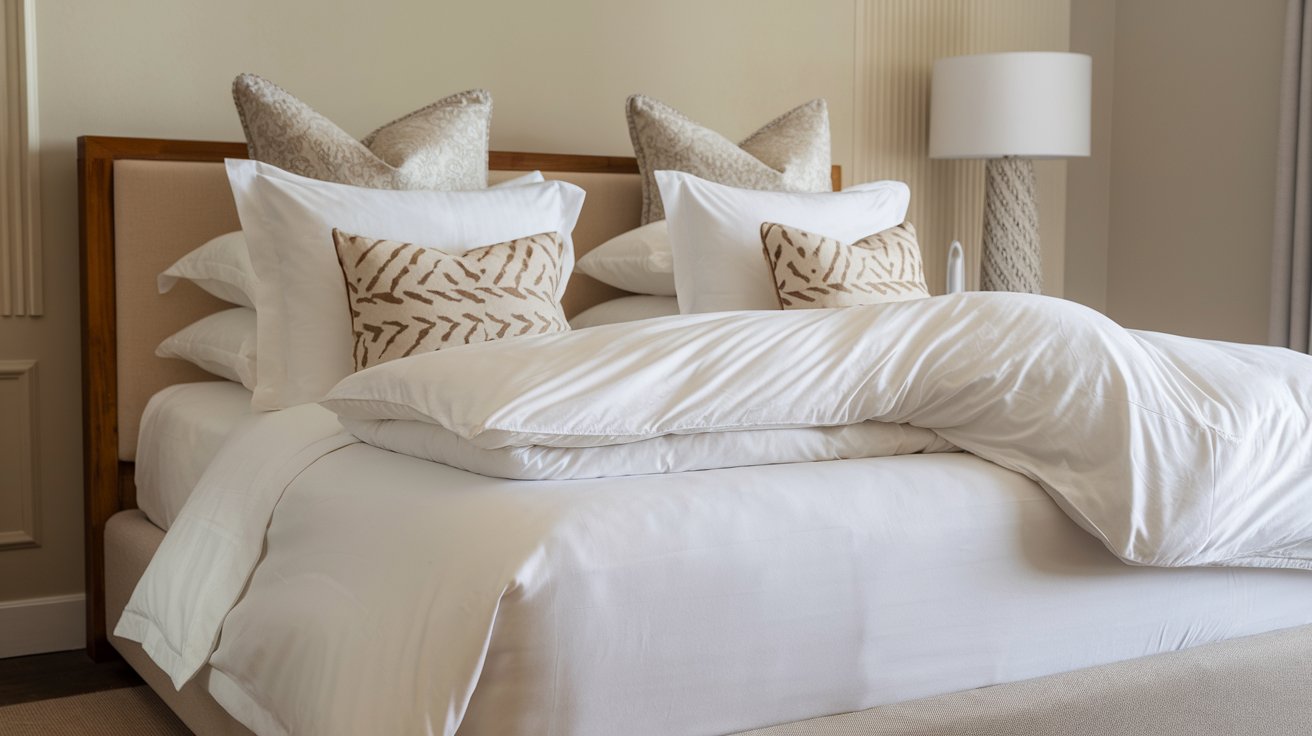
The pillow arrangement distinguishes truly hotel-like beds from standard home setups, with premium properties using 6-10 pillows per queen or king bed. This layered approach combines functional sleeping pillows with decorative elements that create visual height and luxury appeal. The standard configuration includes two sleeping pillows per person, backed by Euro squares, with decorative accent pillows completing the presentation.
Hotels select different pillow types strategically: firmer down-alternative pillows for back sleepers, medium latex pillows for side sleepers, and softer feather blends for stomach sleepers. In 2026, major hotel chains offer pillow menus allowing guests to customize their sleep experience, a concept you can replicate at home by maintaining variety in your pillow collection. Proper pillow fluffing techniques and strategic placement transform your bed from functional furniture into an inviting focal point.
Sleeping Pillow Selection and Placement
Position two standard or queen-sized sleeping pillows (20×26 or 20×30 inches) per person in crisp white pillowcases matching your sheets. Hotels universally use envelope-closure pillowcases that hide the pillow opening, creating cleaner lines than traditional open-end cases. These functional pillows should offer proper neck support with loft between 4-6 inches depending on sleep position preferences.
The down-and-feather pillow remains the hotel standard, combining down’s soft comfort with feather’s supportive structure in typical 70/30 or 80/20 ratios. Alternative options include latex pillows providing firmer, hypoallergenic support, or FeatherFree synthetic fill that mimics down’s feel while accommodating allergy concerns. Fluff pillows daily by karate-chopping the center and smoothing sides, maintaining the plump appearance characteristic of freshly serviced hotel rooms.
Euro Shams and Decorative Pillow Layers
Behind sleeping pillows, arrange Euro square pillows (26×26 inches) in matching or complementary shams, creating the substantial backdrop that adds height and visual weight. Use two Euro squares for queen beds and three for king beds, standing them upright against the headboard. These decorative pillows should feature firmer fill that maintains their shape when positioned vertically throughout the day.
Complete your hotel-style arrangement with 1-2 accent pillows in coordinating colors or patterns, placed in front of all other pillows. These smallest decorative elements (typically 12×18 or 16×16 inches) add personality while maintaining the cohesive, luxurious appearance. Remove all decorative pillows before sleep, storing them in a bedroom bench or chair to prevent floor placement that attracts dust and allergens.
Creating the Signature Folded-Down Look
The turned-down bed service hotels provide each evening creates an inviting entrance into freshly prepared linens. This technique involves folding the top sheet and duvet down at a precise angle, revealing crisp inner surfaces while creating a triangular fold at the bed’s top corner. This presentation style signals cleanliness and care, psychologically preparing guests for comfortable rest.
Recreate this luxury hotel detail by standing at the bed’s foot and grasping the duvet and top sheet together at the corner. Fold both layers down simultaneously to the bed’s center, creating a diagonal fold line from corner to center. Smooth the folded section to eliminate wrinkles, ensuring the decorative hem of your top sheet remains visible. This simple touch takes 30 seconds but dramatically elevates your bed’s appearance, especially when paired with properly fluffed and arranged pillows.
Finishing Touches and Daily Maintenance
Hotels maintain pristine bed presentation through consistent daily protocols that take just minutes but preserve that fresh-made appearance. Professional housekeepers smooth all surfaces, check for stains or damage, and ensure symmetrical pillow placement during turndown service. These small attentions accumulate into the noticeably superior experience that distinguishes hotel beds from typical home bedding.
Implement a simplified version by making your bed within 15 minutes of waking, while linens remain slightly warm and more pliable for smooth tucking. Weekly sheet changes maintain freshness, while monthly duvet laundering preserves cleanliness without excessive wear. In 2026, luxury hotels report that proper daily bed making extends quality linens’ lifespan to 200-300 wash cycles, representing significant cost savings over time while maintaining appearance standards.
Bed Skirt and Throw Blanket Additions
Add a tailored bed skirt (also called dust ruffle) to conceal the box spring and under-bed storage, creating the polished, finished look hotels achieve. Select skirts with 15-inch drops for standard bed heights or 18-21 inches for pillow-top mattresses, ensuring fabric reaches approximately one inch from the floor. Platform beds using decorative wooden or upholstered bases typically skip this element, allowing the frame itself to provide visual finish.
Drape a coordinating throw blanket across the bed’s foot, either folded in thirds lengthwise or casually arranged for textural interest. This accent layer serves both decorative and functional purposes, providing extra warmth within arm’s reach while adding color and pattern to neutral hotel-white foundations. Hotels in colder United States climates increasingly incorporate this element year-round, noting that 68% of guests utilize the additional layer during their stays according to 2026 hospitality research.
Maintaining Crisp Appearance Throughout the Week
Preserve your hotel-quality bed between full changes by implementing quick daily touch-ups requiring just 2-3 minutes. Upon waking, pull the top sheet and duvet to the bed’s foot, allowing the mattress to air for 10-15 minutes before remaking. This simple practice reduces moisture accumulation that encourages dust mites, extending the fresh feeling between complete sheet changes.
Smooth all layers from the bed’s center outward when remaking, eliminating wrinkles before they set into creases. Re-tuck loosened corners and fluff pillows thoroughly, restoring their plump appearance. Consider using a wrinkle-release spray on duvet covers and shams between launderings, maintaining that pressed appearance hotels achieve through commercial ironing equipment. These minimal maintenance efforts preserve your investment in quality bedding while ensuring your bedroom maintains its luxury hotel atmosphere daily.
Common Mistakes to Avoid for Hotel-Quality Results
Even with quality materials, several common bed-making errors prevent achieving authentic hotel results. The most frequent mistake involves insufficient tucking, leaving excess fabric loose rather than creating taut, wrinkle-free surfaces. Hotels train staff to use firm, consistent pressure when smoothing and tucking, ensuring every layer sits flat and secure. Home practitioners often skip this intensive smoothing, resulting in lumpy, unprofessional appearances.
Another critical error is mismatched proportions in pillow arrangements or duvet overhang. Hotels maintain strict specifications: duvets extending to bed frame edges, sleeping pillows positioned precisely at the headboard, and Euro shams creating uniform height. Asymmetrical arrangements or insufficient pillow volume immediately signal amateur bed making. Additionally, using incorrect sheet orientation (right-side-up flat sheets) or skipping the fitted sheet’s diagonal corner-stretching technique compromises the foundation of your entire bed setup.
Budget-Friendly Alternatives to Luxury Hotel Bedding
Achieving hotel-style comfort and appearance doesn’t require matching hotels’ substantial bedding budgets. Strategic investments in key areas deliver 80% of the experience at 40% of the cost. Focus your spending on a quality mattress and two sets of good sheets (300-thread-count minimum), while economizing on decorative elements that contribute primarily to aesthetics rather than comfort.
In 2026, major retailers offer hotel-collection alternatives specifically designed for residential use, featuring similar materials at lower price points. These lines typically use slightly lighter-weight fabrics and simpler construction while maintaining the feel and appearance of premium hotel bedding. Purchase white or light neutral sheets to enable hot-water washing and bleaching, extending their pristine appearance significantly longer than dark or printed alternatives. Consider down-alternative fills rather than genuine down for pillows and duvets, achieving similar comfort at 50-60% lower cost while providing easier home laundering.
Where Hotels Source Their Bedding Products
Major hotel chains purchase from specialized hospitality suppliers like Standard Textile, Sobel Westex, and 1888 Mills, companies that manufacture specifically for commercial properties. These suppliers offer residential product lines featuring identical materials engineered for home laundering rather than industrial processing. Direct-to-consumer brands including Brooklinen, Parachute, and Boll & Branch replicate hotel-quality materials while cutting wholesale markups.
Many luxury hotels now retail their proprietary bedding collections directly to consumers, offering authentic hotel products for home use. Marriott’s Marriott Bed, Westin’s Heavenly Bed Store, and Hilton’s Home Store provide exact replicas of their in-room setups. While premium-priced, these options guarantee authentic hotel quality with the benefit of testing during stays before purchasing. Department store hotel collections from brands like Charter Club and Hotel Collection at Macy’s offer similar specifications at more accessible price points for budget-conscious consumers.
DIY Solutions for High-End Bed Accessories
Create custom Euro pillow shams from quality fabric remnants, achieving designer looks at craft-store prices. Basic sewing skills suffice for envelope-closure shams, which require only straight seams and basic measurements. Purchase standard Euro pillow inserts from discount retailers, investing your budget in attractive exterior fabrics rather than hidden fill materials. This approach allows seasonal sham changes without replacing entire pillow collections.
Similarly, bed skirts lend themselves to simple DIY construction, requiring only fabric panels and basic measuring. Box-pleat styles offer the most forgiving construction for beginners while creating sophisticated appearances matching luxury hotel standards. Use clearance upholstery fabrics or even pressed cotton sheets in neutral colors, hemming edges and attaching to a fitted platform that sits between mattress and box spring. These economical solutions redirect budget toward visible, comfort-affecting components like quality sheets and mattress pads where investment delivers tangible benefits.
Seasonal Adjustments for Year-Round Hotel Comfort
Hotels adjust bedding configurations seasonally, optimizing guest comfort across varying temperatures throughout the year. Summer setups emphasize breathable percale sheets, lighter blanket weights, and increased airflow, while winter configurations add insulating layers without excessive weight. Smart seasonal rotations maintain optimal sleep temperatures while preserving that hotel-quality experience regardless of outdoor conditions.
In 2026, temperature-regulating bedding technologies have become more accessible to residential consumers, with cooling gel-infused mattress toppers and moisture-wicking sheet treatments previously exclusive to luxury hotels. These innovations allow year-round use of consistent bedding while automatically adjusting to seasonal temperature fluctuations. However, traditional seasonal rotation remains effective and economical, requiring only strategic swaps between existing bedding components you already own.
Related video about how to make a bed like a hotel
This video complements the article information with a practical visual demonstration.
Everything you need to know about how to make a bed like a hotel
How do hotels make their beds so comfortable?
Hotels create exceptionally comfortable beds through layering systems combining quality mattresses (typically medium-firm innerspring or hybrid models 12-15 inches thick), quilted mattress pads adding cushioning, high-thread-count sheets (300-400 count percale or sateen), and multiple pillow options accommodating different sleep positions. The signature comfort comes from proper support rather than excessive softness, with professional tucking techniques creating wrinkle-free surfaces and premium materials that regulate temperature throughout the night. In 2026, luxury hotels invest $2,000-$5,000 per bed setup, focusing 60% of that budget on the mattress foundation itself.
What type of sheets do five-star hotels use?
Five-star hotels predominantly use 100% long-staple or Egyptian cotton sheets in percale weave with 300-400 thread counts, contrary to the common misconception that higher thread counts are always better. Percale creates a crisp, cool, matte finish preferred by luxury properties, while some hotels select sateen weaves for silkier texture with subtle sheen. White remains the universal color choice because it withstands high-temperature commercial laundering and bleaching, ensuring consistent cleanliness standards. Premium hotels source sheets engineered to survive 200+ wash cycles while maintaining appearance, with envelope-closure pillowcases creating cleaner, more polished presentations than standard open-end designs.
How do you make hospital corners like hotels?
Create professional hospital corners by starting at the bed’s foot after tucking the flat sheet’s bottom edge completely under the mattress. Standing beside the mattress corner, grasp the hanging sheet fabric approximately 12-16 inches from the corner point, lifting it to form a 45-degree angle against the mattress side. Tuck the lower portion of hanging fabric tightly under the mattress, then drape the lifted triangular section down over the mattress edge and tuck it smoothly underneath, forming a crisp, envelope-like corner. This technique takes 15-20 seconds per corner once mastered, creating the taut, wrinkle-free appearance that defines hotel-quality bed making and keeps sheets secure throughout the night.
How often should I change sheets to maintain hotel freshness?
Maintain hotel-standard freshness by changing sheets weekly under normal use, matching the frequency luxury hotels use between guest stays. Pillowcases benefit from twice-weekly changes due to direct facial contact and oil transfer. Duvet covers require monthly laundering unless spills occur, while mattress pads should be washed every 2-3 months. Hotels in 2026 report that quality sheets withstand 200-300 wash cycles when properly maintained, representing 4-6 years of weekly washing. Between changes, air your mattress daily by pulling bedding to the foot for 10-15 minutes, reducing moisture accumulation that encourages dust mites. Using mattress protectors and pillow encasements extends the time between deeper cleaning of these larger items while preserving the fresh feeling.
Can I achieve hotel bed quality with a platform bed?
Yes, platform beds absolutely support hotel-quality bed making when properly configured. While traditional hotels use box spring sets, platform beds with solid slat systems work equally well, especially for memory foam or hybrid mattresses that don’t require box spring foundations. Add a quilted mattress pad for the cushioning layer hotels achieve, and follow identical sheet and layering techniques. The main difference involves bed skirts, which platform beds typically skip to showcase decorative frames. In 2026, boutique hotels increasingly feature platform beds with upholstered or wooden frames, demonstrating that authentic hotel-style luxury depends on quality materials and proper layering technique rather than specific bed frame types. Focus on mattress quality, premium sheets, and professional tucking methods regardless of your frame style.
What is the best pillow arrangement for a hotel-style bed?
The optimal hotel pillow arrangement for a queen bed uses six pillows total: two sleeping pillows per person (standard 20×26 inches) in white pillowcases placed directly against the headboard, two Euro square pillows (26×26 inches) in matching shams standing upright behind sleeping pillows, and 1-2 decorative accent pillows (12×18 or 16×16 inches) in complementary colors placed in front. King beds accommodate three Euro squares instead of two. This layering creates visual height and luxury appeal while providing functional sleeping pillows. Hotels select different pillow fills strategically: firmer options for back sleepers, medium latex for side sleepers, and softer down blends for stomach sleepers, allowing you to customize comfort within the standardized aesthetic presentation.
| Essential Component | Hotel Standard Specification | Key Benefit |
|---|---|---|
| Mattress Foundation | Medium-firm innerspring or hybrid, 12-15 inches thick with box spring or platform support | Optimal spinal alignment and 8-10 year durability with proper support |
| Sheet Selection | 300-400 thread count percale or sateen, 100% long-staple cotton in white | Cool, crisp feel with 200+ wash cycle lifespan and consistent cleanliness |
| Pillow Configuration | 6-8 pillows per bed: sleeping, Euro squares, and decorative accents | Visual luxury appeal with functional support for multiple sleep positions |
| Layering Technique | Mattress pad, fitted sheet, flat sheet with hospital corners, blanket, duvet | Wrinkle-free appearance with secure layers maintaining position throughout night |
| Maintenance Protocol | Daily bed making, weekly sheet changes, monthly duvet laundering | Sustained freshness and extended lifespan of quality bedding investments |
| Budget Investment | $800-1,500 for complete residential setup matching hotel quality standards | Professional luxury appearance with 5-7 year product lifespan providing excellent value |